
When to use this method
- When you need to segregate permissions, granting specific S3 access without modifying your EC2 instance’s main role
- When you require temporary, frequently rotated credentials for S3 access, without managing long-lived access keys
- When working in multi-account AWS environments, enabling cross-account S3 access through role assumption
Setting up the IAM Role
Create the S3 Access Role
- In AWS Console, go to IAM › Roles and click Create role
- For Trusted entity type, select Custom trust policy
- In the Custom trust policy JSON editor, configure who can assume this role. You can choose from:
- IAM Role:
"AWS": "arn:aws:iam::YOUR_AWS_ACCOUNT_ID:role/YourExistingEC2Role" - AWS Service:
"Service": "ec2.amazonaws.com"(for EC2 instances)
YOUR_AWS_ACCOUNT_ID and YourExistingEC2Role):- Click Next
- Attach AmazonS3ReadOnlyAccess policy or create a custom policy for specific buckets:
- Name it (e.g.,
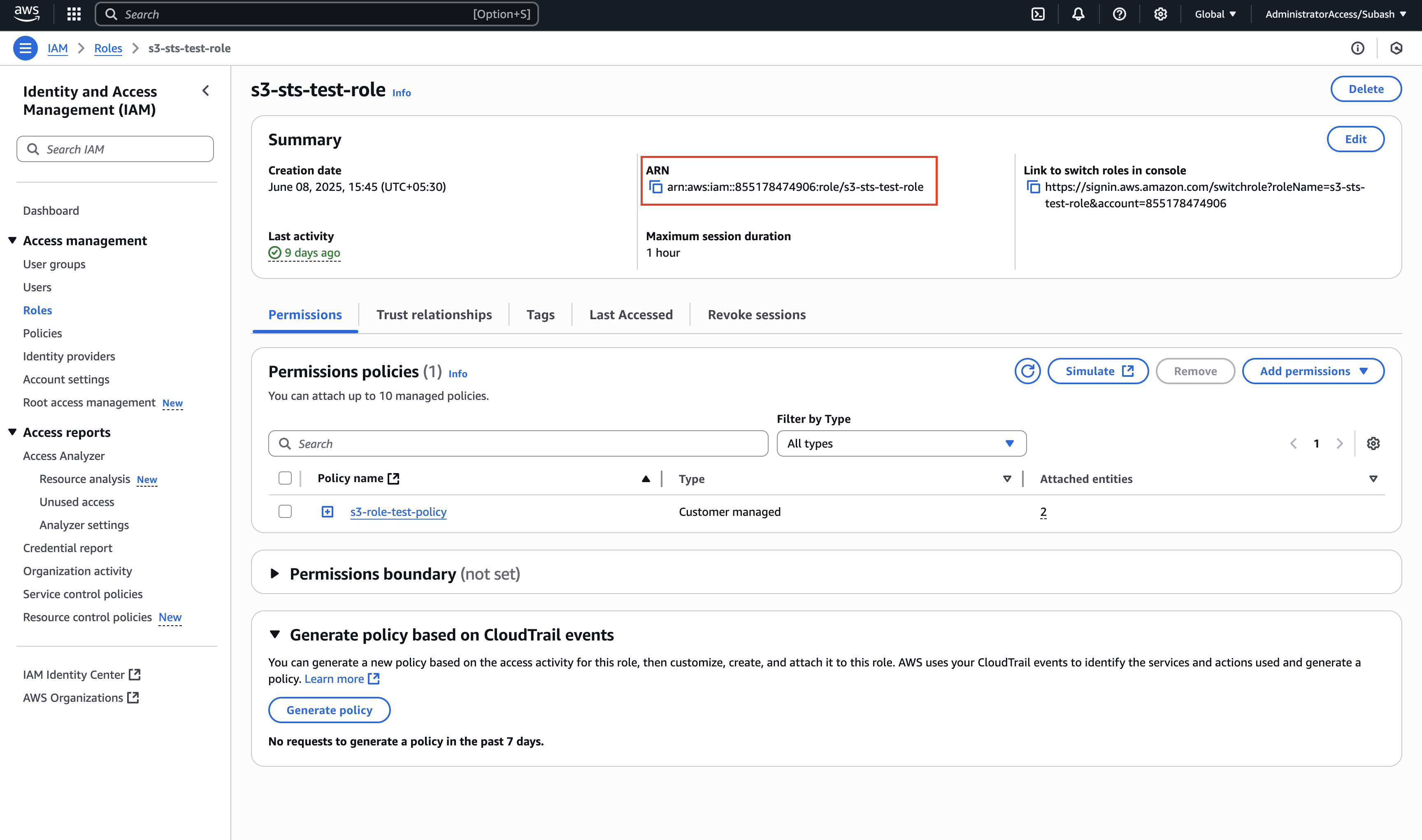
SigmaS3AccessRole) and click Create role - Copy the Role ARN from the role summary page (e.g.,
arn:aws:iam::YOUR_AWS_ACCOUNT_ID:role/YOUR_CREATED_ROLE_NAME)
Grant AssumeRole to EC2 instance role
- Go back to IAM > Roles and find your EC2 instance’s existing role
- Click on the role and go to the Permissions tab
- Click Add permissions > Create inline policy
- Switch to JSON and add this policy (replace with your actual account ID and role name):
- Name the policy (e.g.,
AllowAssumeSigmaS3Role) and click Create policy
Credential Entry in Sigma
When configuring the S3 connector in Sigma, you’ll need to: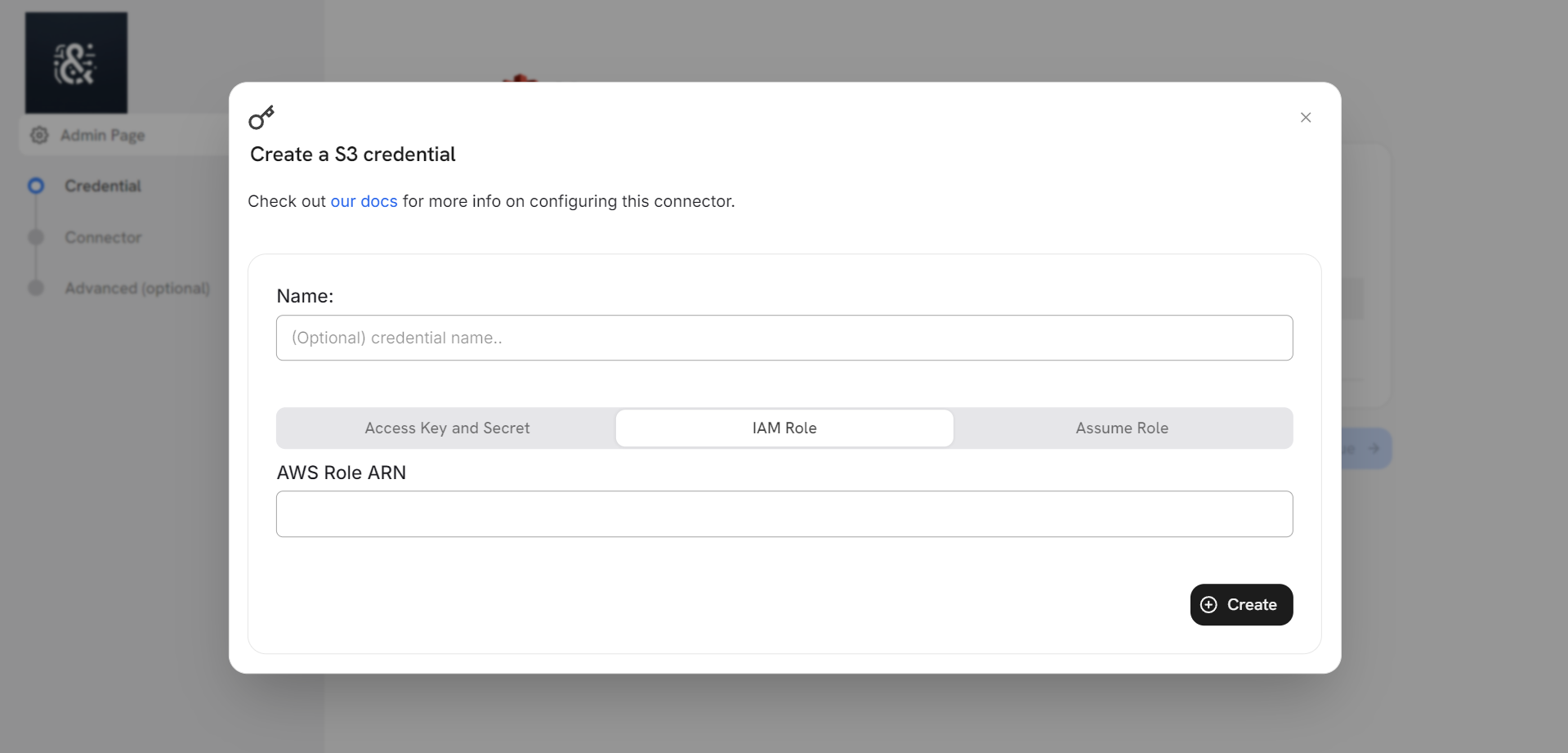 Once you have your IAM Role ARN, proceed to the indexing steps in the overview
to configure your S3 connector.
Once you have your IAM Role ARN, proceed to the indexing steps in the overview
to configure your S3 connector.