
Guide
Create an EC2 instance
Create an EC2 instance with the appropriate resources. For this guide,
we will use the recommended 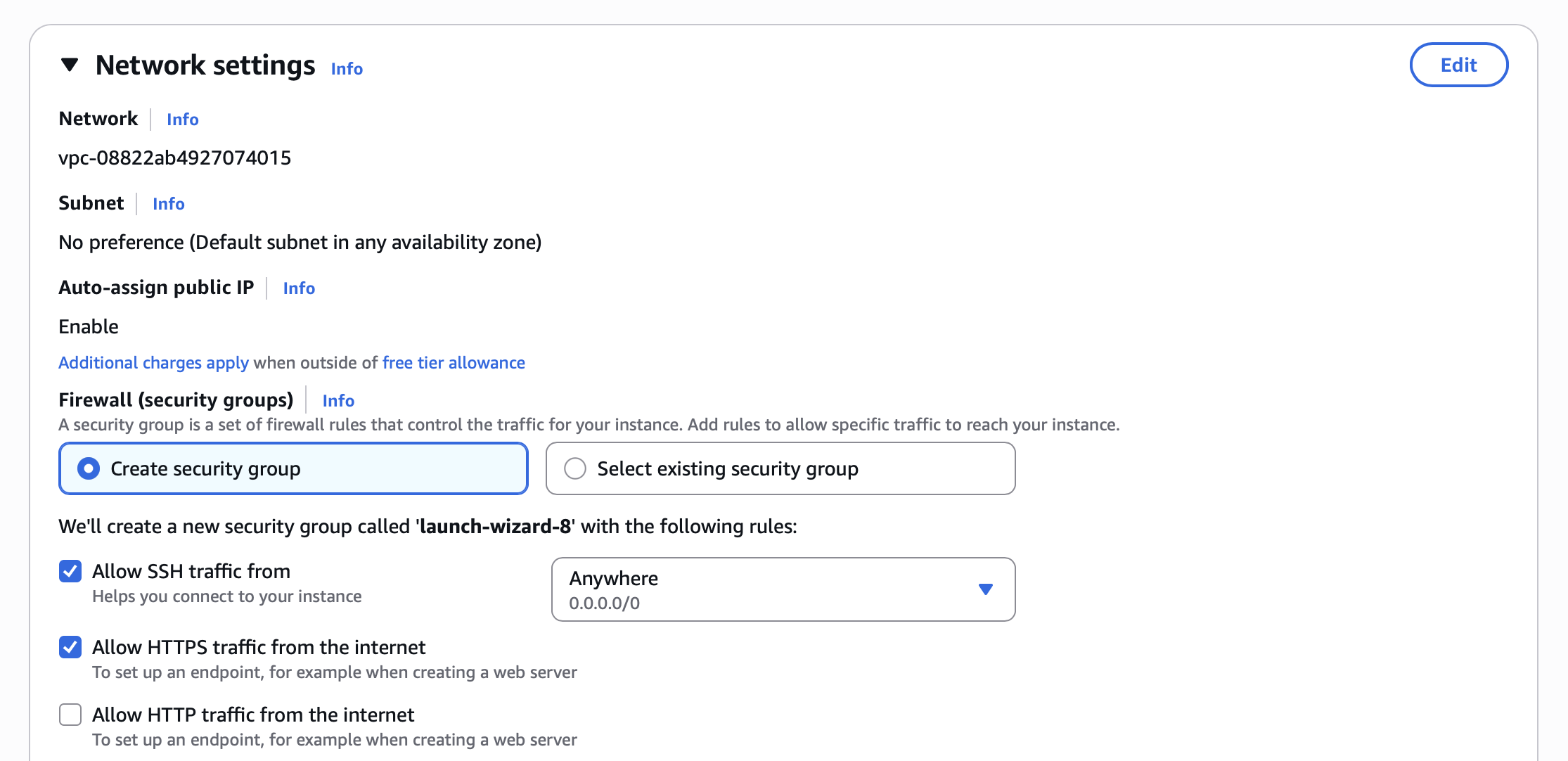
m7g.xlarge instance.Read our Resourcing guide for more details.
- Give your instance a descriptive name like
Sigma-prod - Select the
Amazon Linux 2023AMI - Select the
64-bit (Arm)architecture - Select the
m7g.xlargeinstance type - Select
Allow HTTPS traffic from the internetin the Network settings section - Configure storage following the Resourcing Guide
Point domain to the instance
If you don’t have a domain, buy one from a DNS provider like GoDaddy
or just skip HTTPS for now.
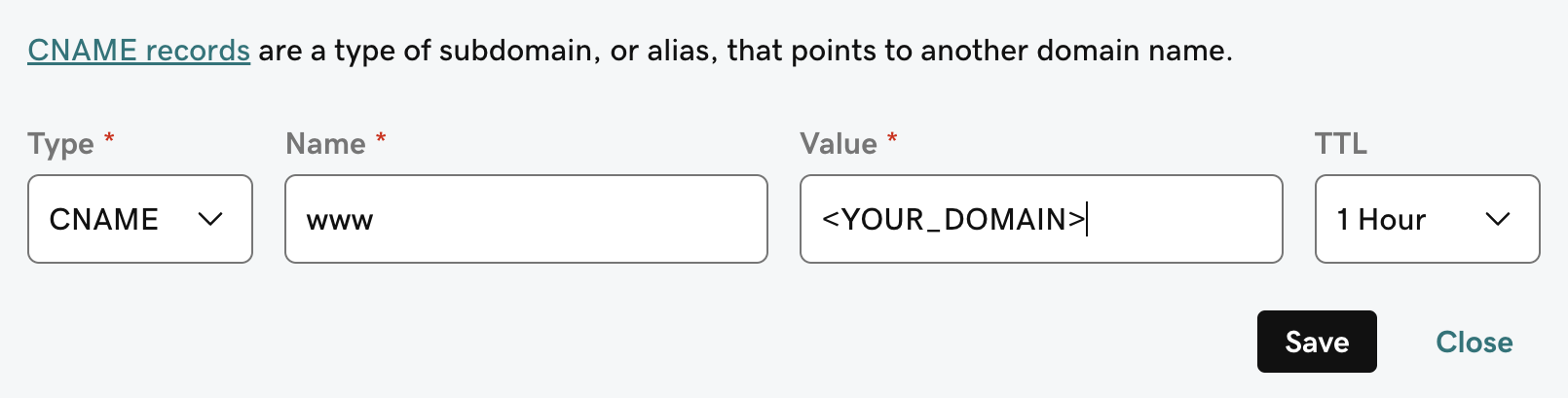
A and CNAME record to our DNS provider.The A record should be the subdomain that you would like to use for the Sigma instance like prod.The CNAME record should be the same name with the www. in front resulting in www.prod pointing to the full
domain like prod.Sigma.app.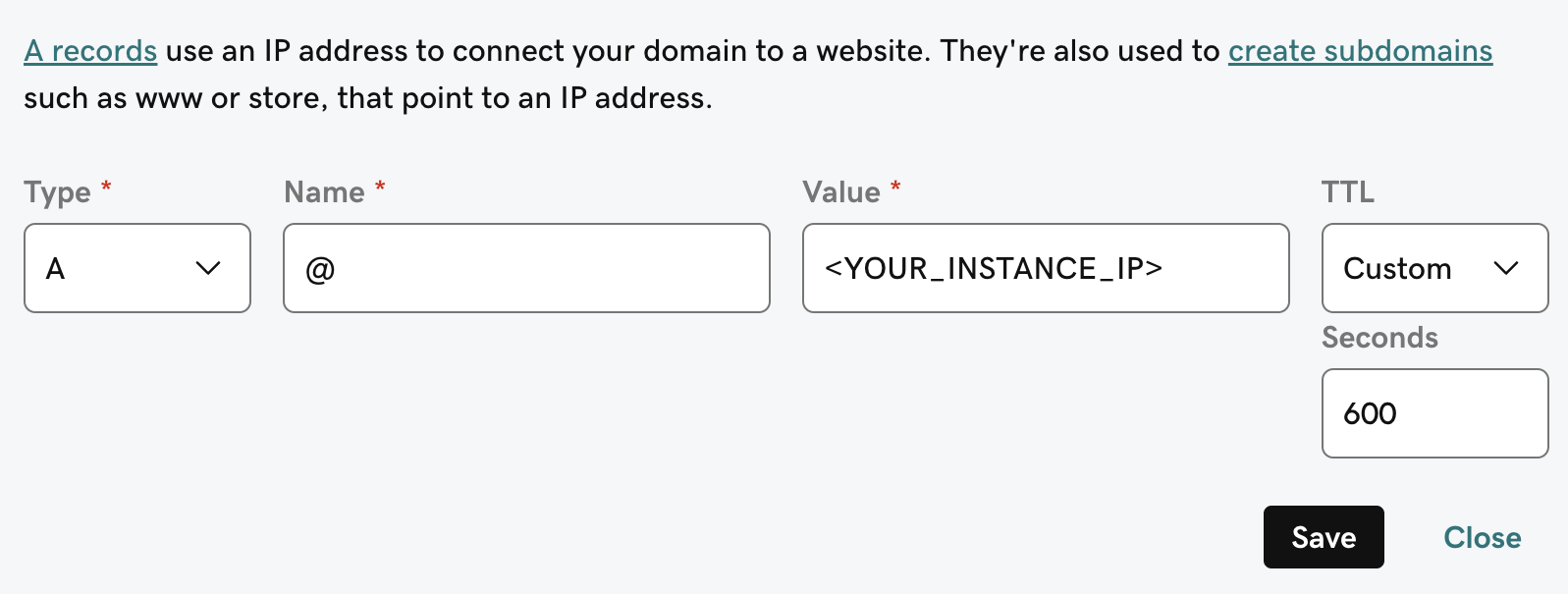
Next Steps
Configure Authentication
Set up authentication for your Sigma deployment with OAuth, OIDC, or SAML.
More Sigma Configuration Options
Learn about all available configuration options for your Sigma deployment.